


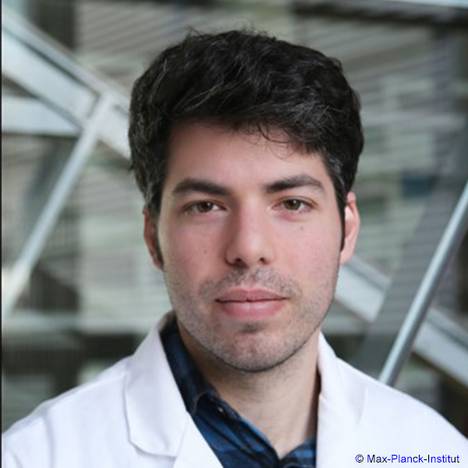
Interview with Ryan Guterman, CEO und Founder of FaradaIC Sensors GmbH
1. Can you briefly introduce FaradaIC and its role in the microelectronic industry?
Ryan Guterman: At FaradaIC, we miniaturize electrochemical gas sensors on microchips using standard microfabrication techniques. With our product, we offer device manufacturers in IoT and consumer electronics a multigas sensing platform that is not available from our competition. It combines miniaturization, low power, and low cost. The company was founded in 2021. Since then, we have grown from three to 23 employees. At our core, we are a semiconductor company specializing in semiconductor manufacturing – meaning we not only design our chips ourselves, but we are also involved in their production. Furthermore, we develop a large portion of the software for our sensors in-house, particularly the firmware, and understand the sensors' functionality down to the smallest detail. Therefore, we are also a chemical company. The materials we use are fundamental for our sensors to function. They are manufactured in our laboratory and exist nowhere else in the world. We supply these materials to our manufacturing partners, who then integrate them into the chip. Regarding our role in the field of gas sensing: All gas sensors available today have already been miniaturized or are undergoing a miniaturization process. Only the electrochemical gas sensor has not yet been miniaturized and still looks the same as it has for decades. Our task in the industry is to miniaturize the electrochemical gas sensor for the semiconductor world. Just as others have miniaturized optical sensors or metal oxide sensors, we are working on electrochemical sensors. If we succeed, we will be the market leader in this field.
2. What factors influenced FaradaIC’s decision to settle in Berlin and expand in Brandenburg?
Ryan Guterman: We originally founded the company near Munich. The main reason for moving our headquarters to Berlin was a suitable funding program. Afterwards, we looked for a laboratory in Berlin. Initially, we had premises in Adlershof, but that was only a stopgap solution. We found a suitable location in Teltow, Brandenburg. I had worked in Brandenburg for a long time and had contacts there. Brandenburg is a very supportive state, so we are very lucky. Finding a suitable location for the laboratory in Berlin would have been more complicated, as the requirements for a laboratory location are very high.
3. How does the region’s infrastructure support microchip production and innovation? Are you working with local suppliers or is your supply chain mostly international?
Ryan Guterman: All our production takes place in Germany. We also have a subsidiary in Serbia, where we focus exclusively on sensor research and development. However, we do not manufacture there. As for infrastructure, we needed a chemistry lab. Finding one is extremely difficult, not just in Berlin-Brandenburg, because laboratories for chemical work must be certified. You cannot have just four walls under a roof and put anything you want in there. You need the necessary infrastructure for chemical work, that is why it was very difficult to find suitable premises. The SEA lab where we are located now is a subsidized facility.
4. Are there specific advantages in Berlin-Brandenburg compared to other European tech hubs? How do you assess the availability of skilled labor in Berlin-Brandenburg for microchip manufacturing?
Ryan Guterman: For someone who grew up in Canada, Germany is geographically small – I don't find the distances here very far. That is one of the reasons I consider Berlin-Brandenburg a good location. From here, everything in Germany is easily accessible. We are near Dresden, close to what is known as Silicon Saxony, with comparable companies and suppliers at various locations. Berlin-Brandenburg's proximity to such a center of the German semiconductor industry is definitely a strategic advantage. Collaboration with specialized institutes is also essential. For example, we cooperate with the Fraunhofer Institute in Munich, where my co-founder used to be a department head. Another Fraunhofer Institute in the north is also part of our collaboration. For me personally, it is important that production takes place in Germany, as this has a certain local significance. Regarding Berlin-Brandenburg, the cost of living in Berlin is still significantly lower than in other major cities – not as much as before, but still lower. Berlin offers big-city life and plenty of open space, while the quieter Brandenburg region is just around the corner. This allows people to choose whether they want a more peaceful living environment or prefer the more vibrant city life. For these reasons, I think the Berlin-Brandenburg region has a great future.
5. How do you think the microchip production will evolve in the next five to ten years?
Ryan Guterman: The European Union and Germany have many ambitious plans. These are unlikely to be fully achieved, and we will end up – as is almost the case – somewhere in the middle. Germany has significant advantages in developing cutting-edge technologies – perhaps not the cheapest, but the best, and I do not believe that this will change anytime soon. If places like Malaysia and Taiwan were to outcompete this region, they would have done so already. Therefore, for companies like ours, it is unnecessary to ever scale-up production abroad. If we want the highest quality, we do not need the latest technology to develop a high-value product. We can combine proven technologies with state-of-the-art, proprietary chemistry to manufacture our product and thus remain in Germany and scale our operations. Furthermore, we will expand our production center in Brandenburg. We will bring semiconductor manufacturing to Brandenburg. That is our goal.
Please click here for more information.
